English
- English
- Español
- Português
- русский
- Français
- 日本語
- Deutsch
- tiếng Việt
- Italiano
- Nederlands
- ภาษาไทย
- Polski
- 한국어
- Svenska
- magyar
- Malay
- বাংলা ভাষার
- Dansk
- Suomi
- हिन्दी
- Pilipino
- Türkçe
- Gaeilge
- العربية
- Indonesia
- Norsk
- تمل
- český
- ελληνικά
- український
- Javanese
- فارسی
- தமிழ்
- తెలుగు
- नेपाली
- Burmese
- български
- ລາວ
- Latine
- Қазақша
- Euskal
- Azərbaycan
- Slovenský jazyk
- Македонски
- Lietuvos
- Eesti Keel
- Română
- Slovenski
- मराठी
- Srpski језик

News
How Do Custom Cement Concrete Brick Mold Designs Support Different Brick Shapes?
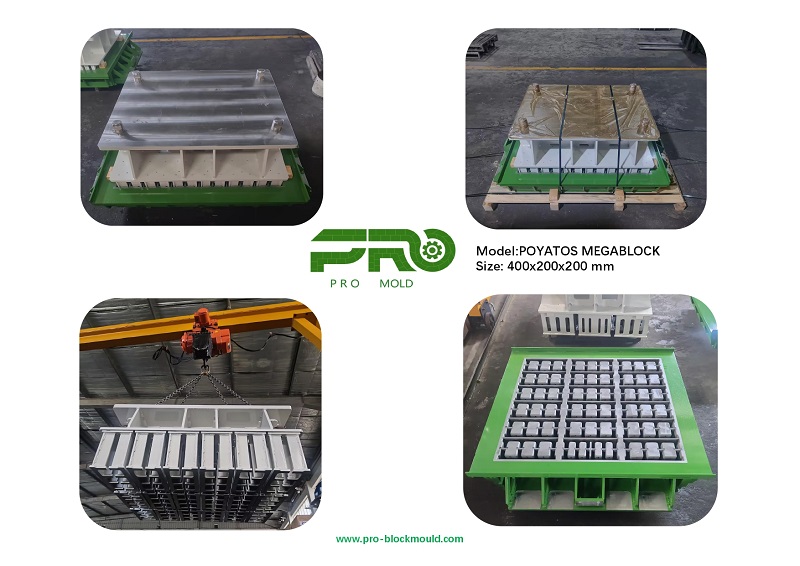
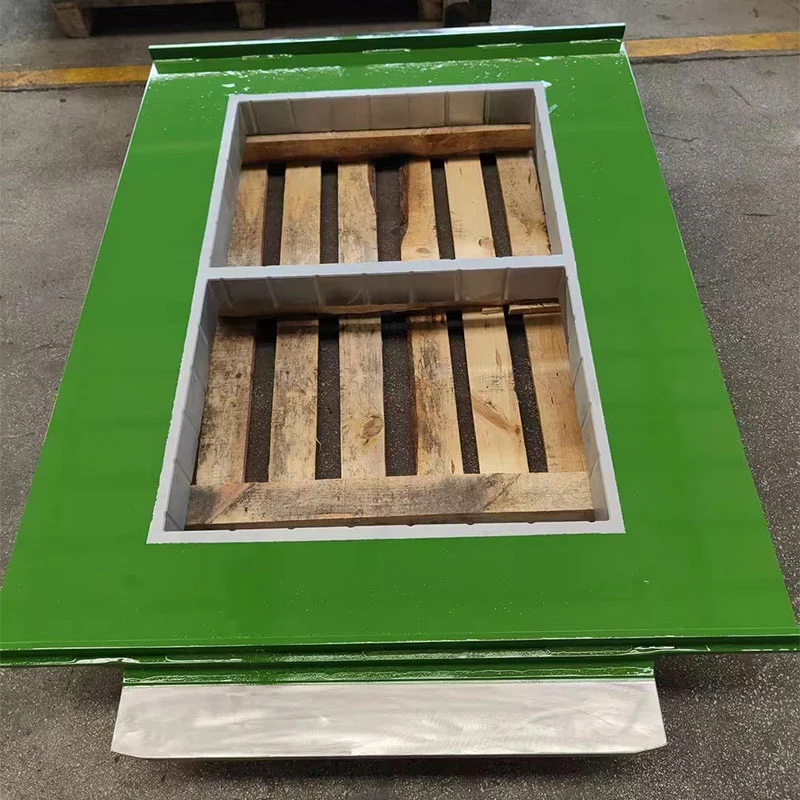
A block plant that has produced standard hollow blocks for years decides to enter the decorative paver market. The existing molds cannot form the interlocking edges, the chamfered corners, or the surface texture that the new product requires. The plant orders a custom Cement Concrete Brick Mold, and within weeks it is producing a product that looks nothing like its standard block line. This is the practical value of custom mold design: it allows a single brick machine to produce a wide range of shapes without replacing the machine itself. The mold is the interface between the machine and the product, and its design determines what shapes are possible, how fast they can be produced, and how long the mold will last. For procurement managers sourcing molds for concrete brick production, understanding how custom designs support different shapes is essential for expanding product ranges and staying competitive.
This guide is written for buyers who need to source custom Cement Concrete Brick Mold designs for different brick shapes. We will explain how cavity geometry defines the shape, how modular mold systems allow quick changeovers between products, how material and heat treatment affect mold life in complex geometries, and how to evaluate a supplier's ability to deliver custom shapes. We will also provide detailed product parameters from our factory at PRO Industry Group Co., Ltd. Whether you are producing standard blocks, interlocking pavers, retaining wall units, or decorative facing bricks, this guide will help you understand how custom mold design supports the shapes your market demands.
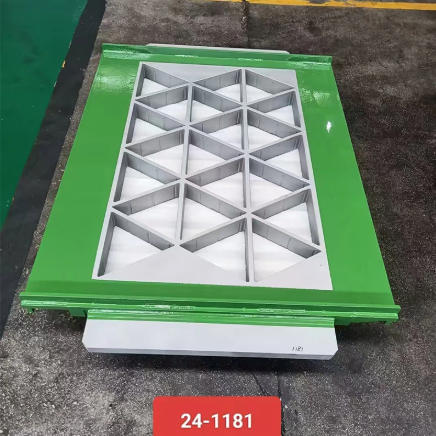
Table of Contents
- 1. Why Do Standard Molds Limit Brick Shape Diversity?
- 2. How Does Cavity Geometry Define the Brick Shape?
- 3. How Do Modular Mold Systems Support Multiple Shapes on One Machine?
- 4. What Material and Heat Treatment Choices Extend Mold Life for Complex Shapes?
- 5. How Do You Evaluate a Custom Mold Supplier for Shape Capability?
- 6. Frequently Asked Questions (FAQ)
- 7. Conclusion
1. Why Do Standard Molds Limit Brick Shape Diversity?
A standard mold is designed for a specific, high-volume product, usually a rectangular hollow block or a simple solid block. Its cavity geometry is fixed, and its opening and ejection mechanisms are optimized for that one shape. When a producer wants to add a new shape—an interlocking paver, a chamfered edge block, a split-face retaining wall unit—the standard mold cannot accommodate the change. The producer has three options: buy a new machine dedicated to the new shape, modify the existing mold in ways that may compromise its strength, or invest in a custom Cement Concrete Brick Mold designed specifically for the new geometry. The first option is capital-intensive. The second is risky. The third is the practical choice for most producers, and it is the reason custom mold design has become a core capability in the concrete products industry.
The limitation of standard molds is not just about the cavity shape. It is also about the mold frame, the ejection system, the vibration transmission, and the wear surfaces. A standard mold is built around a rectangular cavity, and its frame and ejection pins are positioned for that geometry. A complex shape may require a different ejection pattern, a different frame opening, and a different wear surface treatment. The table below shows the typical limitations of standard molds when a new shape is introduced.
| Standard Mold Feature | Limitation for New Shapes | Custom Mold Response |
| Fixed rectangular cavity | Cannot form interlocking edges or chamfers | Cavity geometry designed to the product drawing |
| Ejection pin pattern | May not align with complex product surfaces | Ejection points positioned to avoid marking the product |
| Frame opening | May be too small for larger or irregular shapes | Frame sized to the new mold and machine interface |
| Wear surface treatment | Optimized for simple abrasion, not complex edges | Surface treatment selected for the specific wear pattern |
At PRO Industry Group Co., Ltd., our factory has seen this limitation repeatedly in customer plants. Producers often assume they need a new machine, when what they actually need is a properly designed Cement Concrete Brick Mold that matches the new product and the existing machine. Our engineering team works from the product drawing, the machine interface dimensions, and the production volume to design a mold that supports the new shape without compromising the machine.
2. How Does Cavity Geometry Define the Brick Shape?
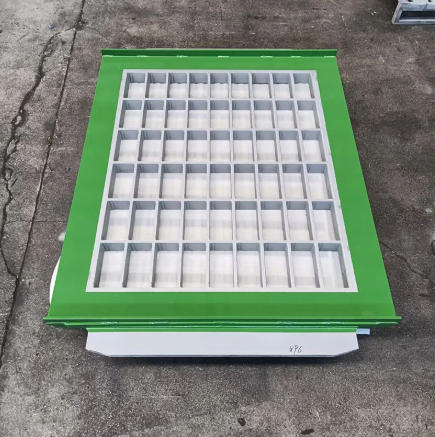
Cavity geometry is the set of dimensions and features inside the mold that form the brick. It includes the length, width, and height of the cavity, the number and position of cores or holes, the edge profile (square, chamfered, radiused), the surface texture (smooth, split-face, brushed), and the draft angle that allows the brick to be ejected. Each of these elements must be designed to match the product specification and to work with the concrete mix, the vibration system, and the ejection mechanism. A custom Cement Concrete Brick Mold is designed by translating the product drawing into a cavity design, then checking that design against the machine's capabilities and the concrete's behavior. The table below shows how product shape features translate into mold cavity design parameters.
| Product Shape Feature | Mold Cavity Design Parameter | Typical Value or Option |
| Interlocking edge | Edge profile geometry and tolerance | +/- 0.2 mm on interlock features |
| Chamfered corner | Corner radius or chamfer angle | 3 mm to 10 mm chamfer |
| Split-face texture | Surface pattern on cavity wall | Machined or etched pattern |
| Core holes | Core pin diameter and position | 40 mm to 200 mm diameter |
| Ejection clearance | Draft angle on vertical walls | 1 to 2 degrees |
| Product height | Cavity depth and mold frame height | 50 mm to 300 mm |
At our factory, we use CAD modeling to design each cavity and simulate the ejection and vibration behavior before machining. This allows us to catch interference, thin walls, and draft angle problems before the mold is cut. Our goal is to provide a Cement Concrete Brick Mold that produces the intended shape consistently, without requiring trial-and-error adjustments on the machine.
3. How Do Modular Mold Systems Support Multiple Shapes on One Machine?
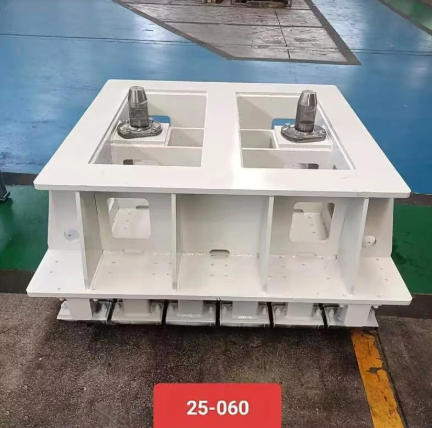
A modular mold system allows a single brick machine to produce multiple shapes by changing the mold insert or the mold box rather than the entire mold assembly. The system typically consists of a master frame that mounts to the machine, and interchangeable cavity inserts that are secured within the frame. The master frame provides the structural interface, the ejection mechanism, and the vibration transmission, while the insert defines the product shape. This approach reduces the cost of adding a new shape, because only the insert needs to be manufactured, not the entire frame. It also reduces changeover time, because the insert can be removed and replaced quickly. The table below shows the typical modular mold configurations and their changeover characteristics.
| Configuration | Changeover Method | Typical Changeover Time | Best Suited For |
| Insert-only change | Replace cavity insert within master frame | 15 - 30 minutes | Small shape variations, frequent changes |
| Mold box change | Replace entire mold box on machine | 30 - 60 minutes | Different product families |
| Quick-change cassette | Pre-assembled cassette slides into frame | 5 - 15 minutes | High-mix, low-volume production |
At PRO Industry Group Co., Ltd., our factory designs modular Cement Concrete Brick Mold systems that allow producers to switch between shapes without replacing the entire mold. We work with the machine manufacturer's interface dimensions to ensure that the master frame fits correctly and that the inserts are easy to handle. Our goal is to help producers expand their product range without expanding their machine fleet.
4. What Material and Heat Treatment Choices Extend Mold Life for Complex Shapes?
Complex shapes place different demands on the mold material than simple rectangular cavities. Thin sections, sharp corners, and textured surfaces are more susceptible to wear, cracking, and erosion. The material and heat treatment must be selected to resist these specific failure modes. For general block production, 42CrMo4 or 40Cr with quenching and tempering is common. For complex shapes with thin edges or textured surfaces, a carburized or nitrided surface is often specified to increase wear resistance without reducing toughness. The table below compares the material and treatment options for complex mold shapes.
| Material / Treatment | Surface Hardness | Toughness | Best Suited For |
| 42CrMo4, quenched and tempered | 48 - 52 HRC | Good | General block and paver shapes |
| 20CrMnTi, carburized | 58 - 62 HRC surface | Moderate | High-wear edges, textured surfaces |
| 42CrMo4, nitrided | 60 - 65 HRC surface | Good core | Complex shapes with thin sections |
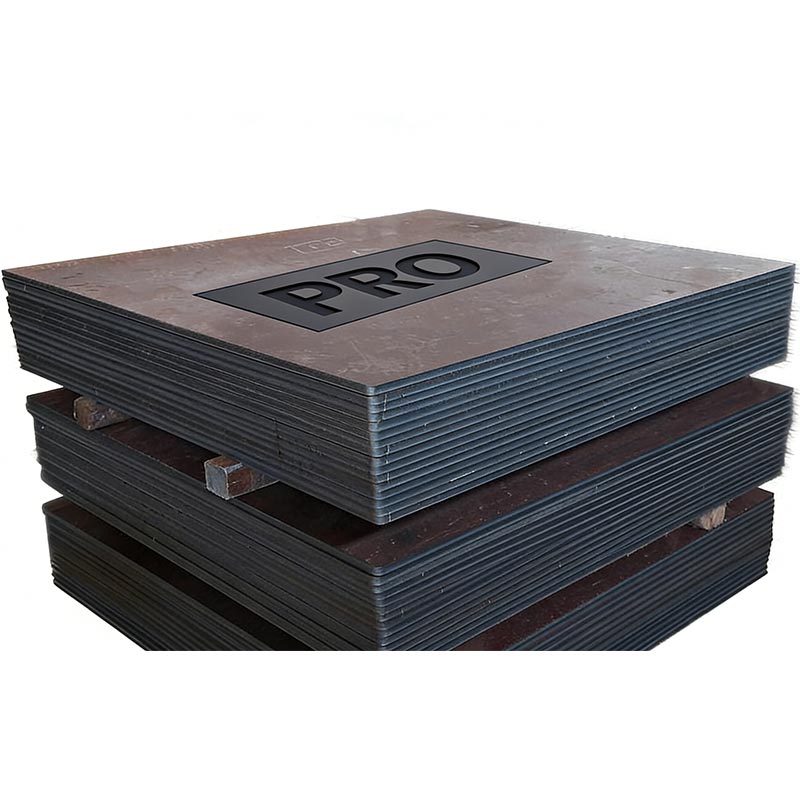
| Hardox 450 | 45 - 50 HRC | Excellent | Heavy-impact, high-abrasion shapes |
At our factory, we select the material and treatment based on the product shape, the concrete mix, and the production volume. We verify the hardness and case depth after treatment, and we inspect the cavity for dimensional accuracy. Our goal is to provide a Cement Concrete Brick Mold that maintains the complex shape over a long service life, not just at the start of production.
5. How Do You Evaluate a Custom Mold Supplier for Shape Capability?
Evaluating a supplier of custom Cement Concrete Brick Mold designs for shape capability requires more than checking a catalog. The supplier must demonstrate the ability to translate a product drawing into a manufacturable cavity, to machine complex geometry to tolerance, to select the right material and treatment, and to support the producer through the first production run. The table below provides a scoring framework that buyers can use during supplier evaluation.
| Evaluation Area | What to Check | Weight |
| Design capability | CAD modeling, ejection simulation, draft analysis | 25% |
| Machining capability | CNC milling, EDM, grinding for complex cavities | 25% |
| Material and treatment | Certified steel, in-house heat treatment, hardness testing | 20% |
| Shape experience | References for similar shapes, sample molds | 15% |
| Production support | Trial run support, adjustment service, spare inserts | 15% |
At PRO Industry Group Co., Ltd., our factory supports customers through each of these areas. We provide design reviews before machining, we machine complex cavities in-house, we control heat treatment and hardness, and we support the first production run. Our goal is to make the custom mold project predictable, not a series of surprises.
6. Frequently Asked Questions (FAQ)
Question 1: Can a custom cement concrete brick mold produce more than one brick shape?
Answer: A single custom mold is designed for one specific cavity geometry. However, a modular mold system with interchangeable inserts allows one machine to produce multiple shapes by changing the insert or mold box. The master frame remains on the machine, and only the shape-defining insert is replaced. This is the most cost-effective way to support multiple brick shapes without buying additional machines.
Question 2: How long does it take to design and manufacture a custom brick mold for a new shape?
Answer: The lead time depends on the complexity of the shape and the availability of the machine interface data. A typical custom mold for a new paver or block shape takes 4 to 8 weeks from design approval to delivery. Complex textures or tight tolerances may extend the schedule. Our factory provides a detailed production schedule after the design review so that the producer can plan the product launch accordingly.
Question 3: What information do I need to provide to get a custom mold quote?
Answer: To quote a custom Cement Concrete Brick Mold, we need the product drawing with dimensions and tolerances, the brick machine model and mold interface dimensions, the expected production volume, the concrete mix design, and any surface texture or color requirements. Photos or samples of the target product are also helpful. With this information, our engineering team can prepare a design concept and a quotation.
Question 4: Will a custom mold for a complex shape last as long as a standard mold?
Answer: The service life depends on the shape complexity, the material and treatment selected, and the operating conditions. Complex shapes with thin edges or textured surfaces may wear faster than simple rectangular cavities, but the correct material and surface treatment can compensate. We select the material and treatment based on the specific wear pattern of the shape, and we provide a service life estimate with the quotation.
Question 5: Can you supply replacement inserts for an existing modular mold system?
Answer: Yes, we can manufacture replacement inserts for modular mold systems, provided that we have the master frame dimensions and the insert interface details. We can also reverse-engineer an existing insert if drawings are not available. Our goal is to help producers expand their shape range without replacing the entire mold system.
7. Conclusion
Custom Cement Concrete Brick Mold designs support different brick shapes by translating the product geometry into a cavity design, by using modular systems that allow one machine to produce multiple shapes, and by selecting materials and treatments that maintain complex shapes over a long service life. The mold is not a commodity; it is the tool that defines what a producer can sell. By understanding how cavity geometry, modularity, and material selection work together, buyers can source molds that expand their product range without expanding their machine fleet. At PRO Industry Group Co., Ltd., our factory has the design, machining, and heat treatment capability to deliver custom molds for standard blocks, interlocking pavers, retaining wall units, and decorative facing bricks.
Whether you are adding a new shape to your product line or replacing a worn mold for an existing shape, we invite you to contact us to discuss your requirements. We can provide design concepts, samples, and detailed quotations. Our commitment to quality and customer support has made us a trusted partner for concrete producers around the world.
Contact PRO Industry Group Co., Ltd. today to discuss your custom Cement Concrete Brick Mold requirements and discover how our designs can support the brick shapes your market demands.
Related News
- What Cleaning Practices Help Protect a Cement Concrete Brick Mold After Production?
- Which Steel Materials Are Suitable for Cement Concrete Brick Mold Production?
- How Does Cement Concrete Brick Mold Accuracy Affect the Quality of Finished Bricks?
- What Makes a Customized Concrete Brick Mold the Right Choice for Consistent Production?
- Cement Concrete Brick Shot Blasting Surface Treatment Machine vs Traditional Surface Treatment Methods: Which Solution Is More Efficient?
- How to Choose the Right Paver Concrete Brick Mold for Landscape Projects
Leave me a message


News Recommendations