English
- English
- Español
- Português
- русский
- Français
- 日本語
- Deutsch
- tiếng Việt
- Italiano
- Nederlands
- ภาษาไทย
- Polski
- 한국어
- Svenska
- magyar
- Malay
- বাংলা ভাষার
- Dansk
- Suomi
- हिन्दी
- Pilipino
- Türkçe
- Gaeilge
- العربية
- Indonesia
- Norsk
- تمل
- český
- ελληνικά
- український
- Javanese
- فارسی
- தமிழ்
- తెలుగు
- नेपाली
- Burmese
- български
- ລາວ
- Latine
- Қазақша
- Euskal
- Azərbaycan
- Slovenský jazyk
- Македонски
- Lietuvos
- Eesti Keel
- Română
- Slovenski
- मराठी
- Srpski језик

News
How Does Cement Concrete Brick Mold Accuracy Affect the Quality of Finished Bricks?
A brick producer receives a shipment of Cement Concrete Brick Mold from a new supplier. The price was competitive, and the delivery was on time. But when the molds are installed and the first batches are produced, problems emerge. The bricks vary in height by 2-3 mm. Some have rounded edges where the mold corners have worn. Others have a rough surface finish that requires additional grinding. The producer's quality control team rejects a significant portion of the output, and customers begin to complain about inconsistent sizes. The root cause is not the concrete mix, the machine, or the operator. It is the mold. A Cement Concrete Brick Mold that is not manufactured to precise tolerances will produce bricks that are not precise. For a brick producer, mold accuracy is not a minor detail; it is the foundation of product quality, production efficiency, and customer satisfaction.
This guide is written for procurement managers and production engineers who are sourcing Cement Concrete Brick Mold for block and brick production. We will explain how mold accuracy affects the finished brick, the key tolerances that matter, the materials and manufacturing processes that determine accuracy, and the criteria for evaluating a supplier. We will also provide detailed product parameters from our factory at PRO Industry Group Co., Ltd. Whether you are producing standard hollow blocks, pavers, or specialized bricks, this guide will help you select molds that deliver consistent quality and long service life.
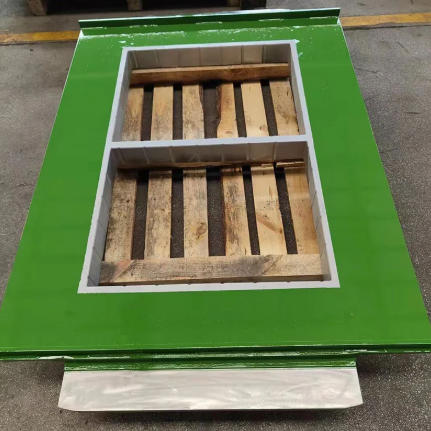
Table of Contents
- 1. What Is a Cement Concrete Brick Mold and What Determines Its Accuracy?
- 2. How Does Mold Accuracy Affect Brick Dimensions and Strength?
- 3. What Materials and Manufacturing Processes Ensure Accuracy?
- 4. What Specifications Should Buyers Include in a Purchase Order?
- 5. How Do You Evaluate a Brick Mold Supplier?
- 6. What Are the Key Product Parameters from Our Factory?
- 7. Frequently Asked Questions (FAQ)
- 8. Conclusion
1. What Is a Cement Concrete Brick Mold and What Determines Its Accuracy?
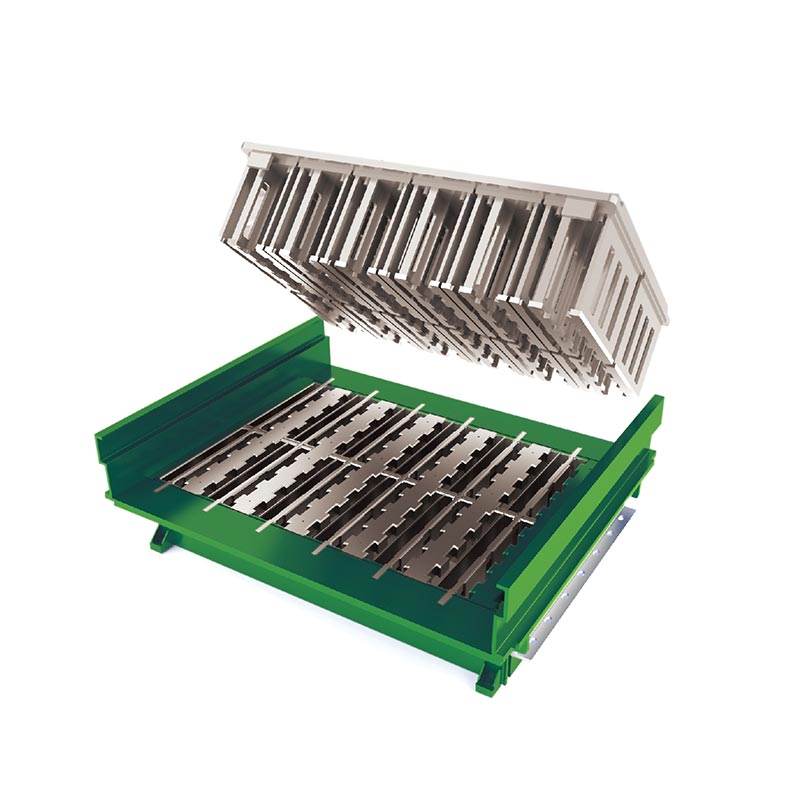
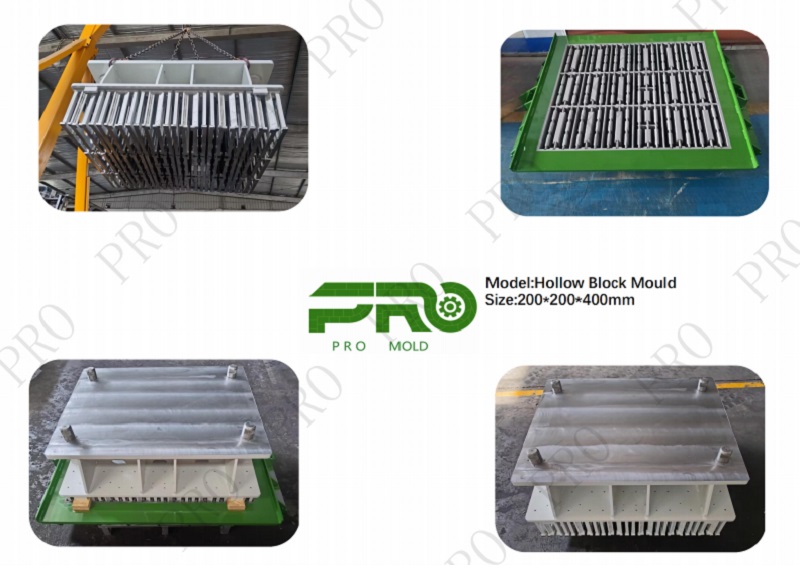
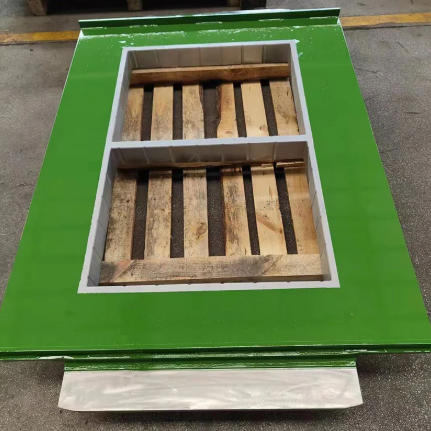
A Cement Concrete Brick Mold is a precision tool used in block-making machines to form concrete bricks and blocks. It consists of a mold box, a core (for hollow blocks), a stripper plate, and a wear plate. The mold box defines the outer dimensions of the brick. The core defines the internal cavities. The stripper plate ejects the finished brick. The wear plate protects the mold from abrasion. The accuracy of the mold is determined by the precision of these components and how they fit together. The key parameters are the dimensional tolerance, the surface finish, the flatness of the wear plate, the alignment of the core, and the hardness of the contact surfaces. The table below summarizes these parameters and their typical values.
| Parameter | Typical Value | Impact on Brick Quality |
| Dimensional Tolerance | +/- 0.1 mm | Controls brick size consistency |
| Surface Finish | Ra 0.4 - 0.8 µm | Affects surface smoothness and release |
| Wear Plate Flatness | 0.05 mm per 100 mm | Ensures uniform brick height |
| Core Alignment | +/- 0.2 mm | Ensures consistent cavity position |
| Surface Hardness | 58 - 62 HRC | Determines wear resistance and life |
At PRO Industry Group Co., Ltd., our factory manufactures Cement Concrete Brick Mold to these tolerances and more. We use precision machining and heat treatment to ensure that every mold meets the required specifications. Our engineering team works with our customers to select the right mold design and material for their specific production requirements.
2. How Does Mold Accuracy Affect Brick Dimensions and Strength?
Mold accuracy affects brick dimensions and strength in several ways. First, the dimensional tolerance of the mold determines the dimensional consistency of the brick. If the mold is not accurate, the bricks will vary in size. This variation causes problems in construction, where bricks must fit together with precise mortar joints. Inconsistent brick sizes also cause problems in palletizing and packaging, where stacks of bricks may become unstable. Second, the surface finish of the mold affects the surface quality of the brick. A rough mold surface will produce bricks with a rough surface, which may require additional finishing. A smooth mold surface produces a smooth brick surface, which is often preferred for architectural applications. Third, the flatness of the wear plate affects the height consistency of the brick. If the wear plate is not flat, the bricks will have uneven heights, which causes problems in wall construction. Fourth, the alignment of the core affects the position of the cavities in hollow blocks. If the core is misaligned, the cavities will be off-center, which reduces the strength of the block. The table below summarizes the effect of mold accuracy on brick quality.
| Mold Accuracy Parameter | Effect on Brick Quality | Consequence of Inaccuracy |
| Dimensional Tolerance | Brick size consistency | Construction fit problems, unstable stacks |
| Surface Finish | Brick surface quality | Rough surface, additional finishing required |
| Wear Plate Flatness | Brick height uniformity | Uneven walls, mortar joint problems |
| Core Alignment | Cavity position and block strength | Reduced load-bearing capacity |
| Surface Hardness | Mold wear rate and brick consistency | Progressive quality degradation over time |
At our factory, we understand the critical link between mold accuracy and brick quality. We design our molds to minimize dimensional variation and to maximize surface quality. We also use high-hardness materials and precision heat treatment to ensure that our molds maintain their accuracy over their entire service life. Our goal is to provide our customers with molds that produce consistent, high-quality bricks day after day.
3. What Materials and Manufacturing Processes Ensure Accuracy?
The accuracy of a Cement Concrete Brick Mold is determined by the materials and manufacturing processes used to produce it. The most common materials for brick molds are high-strength steels, such as 42CrMo4, H13, and S7. These steels offer a combination of high hardness, toughness, and wear resistance. The manufacturing process typically involves machining, heat treatment, and precision grinding. The machining process creates the basic geometry of the mold. The heat treatment process hardens the steel to the required hardness. The grinding process achieves the final dimensional tolerance and surface finish. The table below summarizes the materials and processes used in our molds.
| Component | Material | Manufacturing Process | Key Property |
| Mold Box | 42CrMo4, H13 | Machining, heat treatment, grinding | Hardness 58-62 HRC |
| Core | H13, S7 | Machining, heat treatment, grinding | Hardness 54-58 HRC |
| Stripper Plate | 42CrMo4 | Machining, heat treatment, grinding | Hardness 50-55 HRC |
| Wear Plate | Hardox, D2 | Machining, heat treatment, grinding | Hardness 58-62 HRC |
| Guide Pins | SUJ2, SKD61 | Machining, heat treatment, grinding | Hardness 58-62 HRC |
At PRO Industry Group Co., Ltd., our factory uses advanced CNC machining centers and precision grinding machines to manufacture our molds. We also have in-house heat treatment facilities, which allow us to control the hardness and microstructure of the steel. Our quality control system includes dimensional inspection, hardness testing, and surface finish measurement to ensure that every mold meets our specifications.
4. What Specifications Should Buyers Include in a Purchase Order?
When purchasing Cement Concrete Brick Mold, the buyer should include detailed specifications in the purchase order to ensure that the product meets the required performance and quality standards. The key specifications are the brick dimensions, the mold dimensions, the material, the hardness, the dimensional tolerance, the surface finish, the core configuration, and the wear plate thickness. The brick dimensions should be specified in millimeters. The mold dimensions should be specified in millimeters. The material should be specified by grade. The hardness should be specified in HRC. The dimensional tolerance should be specified in millimeters. The surface finish should be specified in Ra. The core configuration should be specified by number and shape. The wear plate thickness should be specified in millimeters. The table below summarizes the specifications that should be included in a purchase order.
| Specification | Unit of Measure | Example |
| Brick Dimensions | mm | 400 x 200 x 200 mm |
| Mold Dimensions | mm | 800 x 600 mm |
| Material | Grade | 42CrMo4 |
| Hardness | HRC | 58-62 HRC |
| Dimensional Tolerance | mm | +/- 0.1 mm |
| Surface Finish | Ra | Ra 0.4 µm |
| Core Configuration | Number and shape | 2-core, rectangular |
| Wear Plate Thickness | mm | 10 mm |
| MOQ | Pieces | 10 pieces |
| Lead Time | Weeks | 4-6 weeks |
At our factory, we work with our customers to ensure that all specifications are clearly defined and understood before production begins. We provide technical drawings for approval. We also provide a detailed quality plan that outlines the inspection and testing procedures that will be used during production. Our goal is to deliver Cement Concrete Brick Mold that meets or exceeds our customers' expectations.
5. How Do You Evaluate a Brick Mold Supplier?
Evaluating a supplier of Cement Concrete Brick Mold requires a focus on manufacturing capability, quality management, material sourcing, and technical support. The supplier must have the capability to machine, heat treat, and grind the mold to the required specifications. This requires advanced CNC equipment and precision grinding machines. The supplier must have a quality management system that ensures consistent quality. The supplier must have the ability to source high-quality steel from reputable suppliers. And the supplier must provide technical support to help you select the right mold design and material for your application. The table below summarizes these evaluation criteria.
| Evaluation Criterion | What to Look For | Why It Matters |
| Manufacturing Capability | CNC machining, heat treatment, precision grinding | Ensures product quality and consistency |
| Quality Management | ISO 9001 certification, inspection records | Ensures consistent product quality |
| Material Sourcing | Reputable steel suppliers | Ensures product performance and durability |
| Technical Support | Engineering team, design assistance | Helps select the right mold for your application |
| Delivery Performance | On-time delivery record, inventory capability | Keeps your production line running |
At PRO Industry Group Co., Ltd., our factory has been producing Cement Concrete Brick Mold for over a decade. We have a strong track record of quality, delivery, and customer satisfaction. We are ISO 9001 certified, and we maintain detailed records of all inspections. Our technical team is available to assist with mold design and material selection. We invite you to evaluate us against these criteria and to consider us as your partner for Cement Concrete Brick Mold.
6. What Are the Key Product Parameters from Our Factory?
The following table provides the key product parameters for our Cement Concrete Brick Mold. These molds are designed for the production of hollow blocks, solid blocks, pavers, and specialized bricks. Our factory can also produce custom molds to meet specific requirements.
| Parameter | Specification Range | Notes |
| Brick Dimensions | Custom | Made to order |
| Mold Dimensions | 600 x 400 mm to 1,200 x 1,000 mm | Selected for machine size |
| Material | 42CrMo4, H13, S7 | Selected for wear resistance |
| Hardness | 54 - 62 HRC | Selected for application |
| Dimensional Tolerance | +/- 0.1 mm | Standard; tighter tolerances available |
| Surface Finish | Ra 0.4 - 0.8 µm | Selected for brick surface quality |
| Core Configuration | 2-core, 3-core, multi-core | Custom shapes available |
| Wear Plate Thickness | 8 - 20 mm | Selected for wear life |
| MOQ | 5 pieces | Negotiable for large orders |
| Lead Time | 4 - 6 weeks | Depends on quantity and customization |
At our factory, we manufacture our Cement Concrete Brick Mold to meet these specifications and more. We can customize the dimensions, material, hardness, and core configuration to suit your specific requirements. Our quality control system includes inspection of raw materials, in-process inspection, and final inspection before shipment. Our goal is to provide our customers with high-quality molds that produce consistent, high-quality bricks.
7. Frequently Asked Questions (FAQ)
Question 1: How often should a Cement Concrete Brick Mold be replaced?
Answer: The replacement interval depends on the mold material, the hardness, the abrasive nature of the concrete mix, and the production volume. A high-quality mold with a hardness of 58-62 HRC can last 100,000 to 300,000 cycles. Molds used with highly abrasive mixes or in high-volume production may need to be replaced more frequently. Regular inspection of the mold for wear and dimensional accuracy is recommended to determine the optimal replacement time.
Question 2: What is the most common cause of mold inaccuracy?
Answer: The most common cause of mold inaccuracy is wear. As the mold is used, the abrasive concrete mix wears away the contact surfaces. This wear changes the dimensions of the mold and the surface finish. Other causes include thermal distortion from the heat treatment process, mechanical damage from handling, and improper installation. Regular inspection and maintenance can help identify and correct these issues before they affect brick quality.
Question 3: Can a worn mold be repaired?
Answer: In some cases, a worn mold can be repaired by re-machining or re-grinding the worn surfaces. However, this is only possible if the wear is not too severe and if the mold has enough material to allow for re-machining. In many cases, it is more cost-effective to replace the mold than to repair it. At PRO Industry Group Co., Ltd., we can evaluate your worn molds and advise on whether repair or replacement is the better option.
Question 4: How does the mold material affect the brick surface finish?
Answer: The mold material affects the brick surface finish through its hardness and surface finish. A harder mold material retains its surface finish longer, which results in a smoother brick surface over a longer period. A softer mold material wears more quickly, which results in a rougher brick surface. The surface finish of the mold itself is also important; a mold with a smooth surface finish will produce a smoother brick. We recommend using a mold material with a hardness of 58-62 HRC and a surface finish of Ra 0.4 µm for the best brick surface quality.
Question 5: What is the typical lead time for a custom Cement Concrete Brick Mold?
Answer: The typical lead time for a custom Cement Concrete Brick Mold is 4 to 6 weeks after drawing approval. This includes the time for material procurement, machining, heat treatment, grinding, and inspection. For urgent orders, we can expedite the process to 3 weeks. At PRO Industry Group Co., Ltd., we work closely with our customers to meet their delivery requirements.
8. Conclusion
The accuracy of a Cement Concrete Brick Mold is the foundation of finished brick quality. It determines the dimensional consistency, surface quality, and strength of the bricks. For brick producers, selecting the right mold is not a minor purchasing decision; it is a strategic decision that affects product quality, production efficiency, and customer satisfaction. At PRO Industry Group Co., Ltd., our factory has the expertise and the equipment to manufacture high-quality Cement Concrete Brick Mold that meets the most demanding requirements. We use high-quality materials, precision machining, and rigorous quality control to ensure that our molds deliver consistent performance and long service life.
Whether you are producing hollow blocks, solid blocks, pavers, or specialized bricks, we invite you to contact us to discuss your requirements. We can provide samples, technical data, and customized solutions. Our commitment to quality and customer satisfaction has made us a trusted partner for brick producers around the world.
Contact PRO Industry Group Co., Ltd. today to discuss your Cement Concrete Brick Mold requirements and discover how our molds can improve the quality of your finished bricks.
Related News
- What Makes a Customized Concrete Brick Mold the Right Choice for Consistent Production?
- Cement Concrete Brick Shot Blasting Surface Treatment Machine vs Traditional Surface Treatment Methods: Which Solution Is More Efficient?
- How to Choose the Right Paver Concrete Brick Mold for Landscape Projects
- Are Wooden Cement Brick Pallets Costing You More Than You Think?
- Why Choose a Cement Concrete Mixer for Efficient Construction Projects?
- Why Choose a Laser Rust Remover Machine for Modern Surface Cleaning?
Leave me a message