English
- English
- Español
- Português
- русский
- Français
- 日本語
- Deutsch
- tiếng Việt
- Italiano
- Nederlands
- ภาษาไทย
- Polski
- 한국어
- Svenska
- magyar
- Malay
- বাংলা ভাষার
- Dansk
- Suomi
- हिन्दी
- Pilipino
- Türkçe
- Gaeilge
- العربية
- Indonesia
- Norsk
- تمل
- český
- ελληνικά
- український
- Javanese
- فارسی
- தமிழ்
- తెలుగు
- नेपाली
- Burmese
- български
- ລາວ
- Latine
- Қазақша
- Euskal
- Azərbaycan
- Slovenský jazyk
- Македонски
- Lietuvos
- Eesti Keel
- Română
- Slovenski
- मराठी
- Srpski језик

News
How Does a Laser Rust Remover Machine Support Efficient Steel Structure Maintenance?
Steel structures are constantly exposed to conditions that accelerate corrosion, including moisture, oxygen, industrial pollutants, airborne salt, and temperature fluctuations. Over time, rust and deteriorating coatings can affect the appearance and service condition of bridges, factory buildings, storage facilities, steel platforms, and heavy industrial frameworks. A Laser Rust Remover Machine supports maintenance by directing concentrated laser energy onto contaminated metal surfaces to remove rust, oxide layers, and selected surface residues. Unlike abrasive blasting, this process does not depend on projecting conventional abrasive media against the workpiece. It gives maintenance personnel another option for treating localized corrosion, preparing steel for inspection, and cleaning selected areas before protective coating work.
The practical value of laser cleaning lies in its controllability and suitability for targeted surface treatment. Maintenance teams can use it on accessible beams, plates, welded connections, brackets, and machinery support structures where conventional cleaning methods may involve additional media handling or mechanical contact. However, cleaning performance depends on the steel condition, contamination type, laser configuration, scanning technique, and required surface finish. PRO focuses on industrial laser cleaning applications where equipment selection and process conditions must match the actual work. By evaluating the material, corrosion level, treatment area, and subsequent maintenance requirements, our approach helps users develop a more consistent cleaning procedure while reducing unnecessary abrasive material handling.
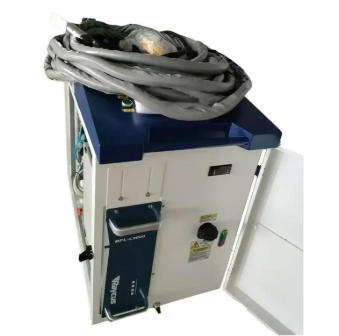
Table of Contents
1. How Does Laser Cleaning Solve Common Steel Structure Corrosion Problems?
2. Why Is Laser Surface Preparation Important Before Steel Inspection and Recoating?
3. Which Equipment Parameters Should Buyers Evaluate for Steel Structure Maintenance?
4. How Can Maintenance Teams Use Laser Cleaning to Improve On-Site Work Efficiency?
How Does Laser Cleaning Solve Common Steel Structure Corrosion Problems?
Corrosion is not a uniform problem across a steel structure. A large beam may have widespread surface oxidation, while a nearby connection plate may show concentrated rust around bolt holes or weld edges. Outdoor platforms can develop corrosion where water collects, and industrial buildings may experience contamination from dust, chemical vapours, or production residues. Maintenance teams therefore need a cleaning method that can address different surface conditions without automatically applying the same treatment to every component.
Laser cleaning works by directing laser energy onto a selected surface. The energy interacts with rust, coatings, oxides, or other contaminants, causing the unwanted layer to detach or be removed through a process influenced by the laser configuration and material properties. The operator controls the treatment path and operating conditions to achieve the required cleaning result. Unlike conventional abrasive blasting, the process does not rely on a stream of external abrasive particles to impact the steel. This can be useful when maintenance work takes place near installed equipment or in locations where abrasive recovery would create additional logistical difficulties.
What Types of Steel Structure Components Can Benefit from Laser Rust Removal?
The suitability of laser cleaning depends on access, surface condition, contamination thickness, and the required result. It is particularly worth evaluating for localized maintenance tasks involving the following components:
- Steel beams and columns: Accessible sections of structural members can be treated to remove surface rust or deteriorated coating before inspection and maintenance. The process can be applied to selected areas without necessarily treating the entire member.
- Welded joints: Corrosion and coating residues around welds can make visual examination more difficult. Cleaning may expose the surface for closer inspection, although it does not replace qualified weld testing or structural assessment.
- Connection plates and brackets: These components often contain edges, corners, and multiple adjoining surfaces. Laser treatment may help clean accessible areas where conventional tools are difficult to position precisely.
- Steel platforms and walkways: Localized corrosion can develop around joints, supports, and areas exposed to standing water. Targeted cleaning can prepare affected sections for further assessment and protective treatment.
- Storage tank exteriors: Selected external steel areas can be prepared for inspection or coating renewal. Internal tank work requires additional evaluation of confined-space hazards, ventilation, and atmospheric conditions.
- Industrial machinery frames: Support structures, mounting plates, and steel housings may need cleaning during scheduled maintenance or equipment refurbishment.
These examples demonstrate why the cleaning method should be selected according to the maintenance task rather than the structure's overall size. A contractor treating several small corroded connection areas may have different requirements from a team preparing thousands of square metres of steel for a complete coating project. The first task may benefit from controlled, localized cleaning, while the second may require a productivity comparison with large-scale abrasive blasting.
How Does Laser Cleaning Compare with Conventional Rust Removal?
Each surface preparation method has a different operating principle. Abrasive blasting uses propelled media to remove rust, scale, and coatings. Grinding relies on mechanical contact between an abrasive tool and the steel. Chemical treatment uses a selected formulation to dissolve or loosen corrosion products. Laser cleaning uses concentrated light energy to interact with the surface layer.
| Cleaning method | Operating principle | Important maintenance consideration |
| Laser cleaning | Uses laser energy to remove selected surface layers and contaminants. | Requires parameter testing, laser hazard controls, and suitable extraction for airborne particles or fumes. |
| Abrasive blasting | Projects abrasive media against the steel surface. | Requires media supply, containment, recovery, and management of the resulting waste. |
| Mechanical grinding | Removes unwanted material through direct abrasive contact. | Tool access, operator technique, and possible changes to the surface profile must be considered. |
| Chemical rust treatment | Uses chemical products to dissolve or loosen corrosion. | Chemical compatibility, exposure controls, rinsing, residue management, and disposal are important. |
Laser cleaning may reduce the need for conventional abrasive media in suitable applications. It can also limit direct mechanical contact with the steel, which is useful when the task requires controlled removal of a surface layer. However, it should not be described as a universal replacement for blasting or grinding. Large areas with heavy corrosion may be more efficiently treated using established mechanical preparation methods. Some coating systems also require a defined surface profile that laser cleaning alone may not produce.
Why Does Corrosion Thickness Change the Cleaning Strategy?
Light surface rust and thick, layered corrosion do not respond identically to laser treatment. Thin oxidation may be removed under relatively straightforward conditions, while heavy rust scale can require a different combination of laser settings, scanning speed, and repeated passes. Deep pitting introduces another issue: even after the loose corrosion products have been removed, the underlying steel may remain uneven or structurally weakened.
For example, consider a steel support column with localized corrosion near its base. A maintenance team may first remove loose deposits and assess the remaining surface. If the corrosion is superficial, laser cleaning may be suitable for preparing the area for inspection and subsequent coating. If the steel has lost significant thickness, cleaning alone will not restore its load-bearing capacity. The responsible engineer must determine whether thickness measurement, repair, reinforcement, or component replacement is necessary.
Another factor is the composition of existing coatings. Old paint, oil, grease, and industrial deposits can behave differently under laser exposure. Certain coatings may produce hazardous fumes or fine particles during treatment. Before work begins, the team should identify potentially hazardous substances and establish suitable extraction, containment, and personal protection measures.
PRO Industry Group Co., Ltd. treats application assessment as an important part of equipment selection. Our technical evaluation should consider the actual corrosion condition, the material being cleaned, the required finish, and the surrounding work environment. This helps users determine whether laser treatment is appropriate, what process testing is needed, and where another cleaning method may be more practical.
Why Is Laser Surface Preparation Important Before Steel Inspection and Recoating?
Removing rust is only one part of a successful maintenance programme. After cleaning, the steel may need to undergo visual inspection, thickness measurement, repair, primer application, or a complete protective coating process. The required surface condition depends on what happens next. A small inspection area around a weld does not necessarily need the same preparation as a large beam that will receive a new industrial coating system.
This is where the purpose of surface preparation becomes important. Rust and deteriorated coatings can conceal defects, interfere with inspection, and weaken the interface between steel and a new coating. Oil, dust, soluble salts, and residual corrosion products may also affect coating adhesion or contribute to premature coating failure. A Laser Rust Remover Machine can help remove selected surface layers, but the resulting steel must still be checked against the requirements of the inspection procedure or coating specification.
How Can Surface Cleaning Improve the Inspection Process?
Inspectors need a sufficiently clean surface to identify visible corrosion patterns, coating defects, cracks, and other signs of deterioration. A layer of rust or paint may obscure the boundary of a defect or make it difficult to determine whether corrosion is active or whether the coating has simply discoloured. Cleaning a selected area can reveal more of the underlying surface and help inspectors decide what further examination is appropriate.
Consider a steel connection plate in an industrial building. Rust has developed around the edge of the plate and near several bolts. The maintenance team needs to determine whether the corrosion is limited to the coating or whether the steel itself has deteriorated. Removing the loose surface layer from an agreed inspection area can make visual assessment more reliable. If the condition raises concerns, qualified personnel may then use suitable non-destructive testing or thickness measurement methods.
It is important to distinguish surface preparation from structural inspection. Laser cleaning does not measure remaining wall thickness, identify every subsurface crack, or confirm that a structural member is safe. It exposes the surface so that appropriate inspection methods can be applied. Depending on the suspected defect and component, further examination may involve ultrasonic thickness testing, magnetic particle testing, dye penetrant testing, or other approved techniques.
What Makes a Cleaned Surface Suitable for Protective Coating?
Protective coating performance depends on several factors working together. These include substrate cleanliness, surface profile, coating compatibility, film thickness, application conditions, and curing. A coating applied over residual rust, oil, salts, or dust may not achieve the expected adhesion or service life. The problem may not become visible immediately; coating blistering, peeling, or underfilm corrosion can appear later.
Laser treatment can remove selected contaminants and expose the steel, but visual brightness alone does not prove that the surface is ready for coating. Some coating systems require a specified anchor profile to support mechanical adhesion. If the laser process produces a surface that is too smooth or does not meet the specified preparation grade, an additional surface treatment may be necessary.
Before choosing a cleaning process, maintenance teams should establish the following requirements:
- Identify the coating system: Confirm the primer and topcoat requirements, including the manufacturer's surface preparation instructions.
- Define the required cleanliness: Specify the acceptable condition after cleaning and the method used to verify it.
- Check the surface profile: Determine whether the coating system requires a defined roughness or anchor pattern that must be produced by an additional process.
- Assess soluble contamination: Where relevant, test for salts or other contaminants that may remain even after visible rust has been removed.
- Control the time before coating: Protect the prepared steel from moisture, dust, and renewed contamination. Flash rust may develop under certain environmental conditions.
- Record acceptance: Document inspection results and obtain approval before applying the next coating layer.
How Should Contractors Verify the Cleaning Result?
A reliable acceptance process should use measurable criteria wherever the project specification requires them. Photographs are useful for documenting the work, but photographs alone cannot confirm every aspect of surface quality. A maintenance record should identify the component, treatment area, cleaning method, inspection result, and approval status.
For a coating project, verification may include visual cleanliness assessment, surface profile measurement, dust assessment, soluble salt testing, or other tests specified by the coating manufacturer or project engineer. The precise combination depends on the service environment and the coating system. A marine structure, for example, may have different contamination risks from an indoor factory support frame.
It is also useful to inspect the steel for unwanted effects from the cleaning process. These may include heat tint, discoloration, local distortion, or changes to the surface condition. The purpose is not merely to remove rust, but to achieve a result that is acceptable for the next stage of work.
When Is Laser Cleaning Not the Best Preparation Choice?
Laser cleaning is not automatically the most economical or technically suitable method for every coating project. If a large structure requires a specified surface profile over an extensive area, abrasive blasting may remain the more practical choice. If corrosion is extremely thick or the surface is heavily scaled, the time needed for laser treatment may be higher than expected. Where the target area is hidden behind another component, direct laser access may be impossible without dismantling or repositioning the structure.
There are also situations where the substrate itself needs repair rather than further cleaning. Deep pitting, cracks, perforation, or significant section loss require engineering assessment. Removing corrosion products can reveal the extent of the damage, but it cannot rebuild lost metal or restore the original structural strength.
For this reason, PRO Industry Group Co., Ltd. recommends testing a representative area before a large maintenance operation. Our approach is to connect the cleaning result with the next maintenance step, whether that involves inspection, coating, or repair. This helps users avoid purchasing equipment based solely on visible rust removal when the real requirement is a verified surface preparation process.
Which Equipment Parameters Should Buyers Evaluate for Steel Structure Maintenance?
Equipment specifications directly influence the range of applications a laser cleaning system can handle. However, buyers should not judge a machine by laser power alone. Cleaning performance depends on the relationship between power, pulse characteristics, scanning speed, optical design, surface contamination, and the required finish. A configuration that works well on thin rust over a flat steel plate may not deliver the same result on thick corrosion around a complex welded joint.
For industrial maintenance, the equipment must also fit the working environment. A contractor may need to transport the system between different work zones, reach elevated structural members, or operate in a workshop where extraction and power supply are available. The selected configuration should therefore be evaluated as a complete cleaning system, including the laser source, cleaning head, optical cable, electrical requirements, safety arrangements, and supporting equipment.
Which Technical Specifications Should Be Included in the Equipment Evaluation?
The following table outlines the main specifications buyers should request when assessing a proposed industrial laser cleaning configuration. Specific numeric values have not been supplied in the current PRO product information. They must be confirmed against the exact model and configuration before purchase.
| Equipment parameter | Technical significance | Information to confirm |
| Laser type | Determines how laser energy is delivered to the surface. | Whether the proposed configuration uses a pulsed or continuous-wave laser. |
| Rated laser power | Influences available energy and potential cleaning productivity. | Rated output power and recommended application range for the specific model. |
| Wavelength | Affects the interaction between the laser, substrate, and contamination. | Specified wavelength and compatibility with the intended work materials. |
| Pulse duration | Relevant to energy delivery and thermal interaction in pulsed systems. | Available pulse-duration range, where applicable. |
| Pulse frequency | Can affect treatment behaviour and process consistency. | Adjustable frequency range and recommended settings for different surfaces. |
| Scanning speed | Influences exposure time, cleaning uniformity, and treatment productivity. | Supported speed range and operating guidance for different corrosion conditions. |
| Cleaning width | Determines the width of the treatment path and affects surface coverage. | Available scanning width and compatible optical configurations. |
| Cooling method | Affects equipment thermal management and operating requirements. | Air or water cooling configuration and associated maintenance needs. |
| Power supply | Determines whether the equipment can operate with the site's electrical infrastructure. | Input voltage, frequency, rated consumption, and connection requirements. |
| Optical cable | Affects the distance and flexibility between the main unit and cleaning head. | Cable length, handling limits, protection requirements, and replacement procedure. |
| Cleaning head | Influences operator handling, access, and treatment control. | Head dimensions, weight, scanning design, and available accessories. |
| Extraction compatibility | Supports control of fumes and airborne particles generated during cleaning. | Recommended extraction arrangement and compatible filtration requirements. |
| Safety configuration | Helps control exposure to hazardous laser radiation. | Laser classification, interlocks, emergency stop, protective enclosure options, and required eyewear. |
How Do Laser Power and Pulse Settings Influence Cleaning Performance?
Laser power is an important starting point, but higher output does not automatically produce a better result. The actual energy reaching the workpiece depends on the optical configuration and operating conditions. The response also changes according to the type and thickness of the contamination. A light oxide layer, thick rust scale, and multilayer paint system should not be treated as identical materials.
In a pulsed laser system, pulse energy, duration, and repetition frequency influence how energy is delivered to the surface. In a continuous-wave system, output power and scanning conditions have a different relationship with treatment behaviour. Buyers should confirm which configuration is being offered and request application guidance for the intended material.
Scanning speed is equally important. If the cleaning head moves too quickly, the energy delivered to a given area may be insufficient, leaving residual contamination or requiring additional passes. If the head moves too slowly, excessive local exposure may create unwanted heating or surface changes. The correct operating window depends on the combination of laser parameters, spot size, scanning overlap, and the condition of the steel.
A practical equipment trial should therefore record the settings used, the number of passes, the resulting surface condition, and the time required to treat a defined area. This information is more useful for estimating real productivity than relying on a maximum power figure in isolation.
Why Are Cleaning Width and Optical Design Important for Structural Work?
Steel structures contain large flat sections as well as narrow edges, corners, welds, and connection details. A wider cleaning path may help cover accessible plate surfaces, while a narrower path may offer more control around complicated geometry. The appropriate configuration depends on the balance between coverage and precision.
Optical cable length and cleaning head design also affect usability. A maintenance contractor working on a high platform may need sufficient cable reach and a safe way to position the main unit. A workshop operator may place greater importance on ergonomic handling during repeated component cleaning. Cable routing must be planned carefully to prevent trip hazards, accidental pulling, and damage to the optical assembly.
Cooling and electrical requirements should be checked before equipment arrives at the site. Buyers should confirm the permitted ambient conditions, ventilation requirements, input power, and any restrictions on continuous operation. For outdoor projects, protection against dust, moisture, and weather exposure must be assessed according to the equipment manufacturer's stated limits.
What Should Buyers Confirm Before Requesting a Quotation?
A useful quotation begins with an accurate description of the work. Rather than asking only for a machine price, maintenance contractors should provide enough technical information for the supplier to recommend a suitable configuration.
- Steel grade and the approximate dimensions of the components.
- Rust condition, coating type, contamination thickness, and presence of oil or grease.
- Estimated treatment area and whether the work is localized or continuous.
- Required surface condition after cleaning and the next maintenance operation.
- Expected working hours, shift pattern, and site productivity requirements.
- Available electrical supply and environmental conditions.
- Access limitations, working height, and distance between the machine and treatment area.
- Extraction, filtration, laser barriers, protective eyewear, and operator training requirements.
- Any project standards, coating specifications, or inspection criteria that must be met.
PRO Industry Group Co., Ltd. should be asked to provide a model-specific specification sheet and clarify which accessories are included in the proposed configuration. Our purchasing evaluation should also cover installation requirements, operating guidance, maintenance intervals, consumable parts, warranty terms, and technical support arrangements. These details allow buyers to compare equipment on its actual suitability for the project rather than on headline specifications alone.
How Can Maintenance Teams Use Laser Cleaning to Improve On-Site Work Efficiency?
Even suitable equipment cannot deliver a reliable maintenance result without an organized work process. Steel structure cleaning may take place in an active factory, on an outdoor platform, inside a workshop, or at a site where access is restricted. Each environment creates different requirements for power supply, ventilation, operator positioning, material handling, and work-area isolation.
The best way to integrate laser cleaning is to treat it as one stage in a maintenance procedure. The team should first identify the condition of the steel, determine the required surface result, establish the safety controls, and test the cleaning process. Once the method has been approved, operators can follow a documented procedure and inspectors can verify the completed work before repairs or coating begin.
What Should Maintenance Teams Do Before Cleaning Starts?
Preparation begins with a site survey. The supervisor should identify the components to be treated, the type of contamination, access limitations, nearby equipment, and any hazards associated with the existing coating. If the structure is load-bearing or shows signs of significant deterioration, a qualified engineer should determine whether additional assessment or temporary support is required before work proceeds.
The next step is to review the contamination. Surface rust, old paint, oil, and industrial deposits can behave differently during laser treatment. If the coating may contain lead or other hazardous substances, the project must include a suitable risk assessment and exposure-control plan. The fact that laser cleaning does not use conventional blasting media does not mean it produces no airborne contaminants. Fumes and fine particles may still be generated and must be controlled.
Before full production begins, operators should conduct a trial on a representative area. The test should confirm the selected settings, scanning pattern, overlap, and number of passes. The team should inspect the result for remaining rust, unwanted heating, discoloration, or changes to the steel surface. If the work involves coating preparation, the coating contractor should confirm that the cleaned surface meets the agreed requirements.
How Should a Typical Steel Maintenance Workflow Be Organized?
The following sequence provides a practical framework for integrating laser cleaning into a planned maintenance task:
- Inspect and document: Photograph the affected area, identify the component, and record the visible corrosion and coating condition.
- Define the treatment objective: Decide whether the purpose is visual inspection, localized rust removal, coating preparation, or component refurbishment.
- Assess hazards: Review laser exposure, airborne contaminants, electrical supply, working at height, confined spaces, and nearby operations.
- Prepare the work zone: Establish suitable barriers, warning signs, extraction, safe cable routing, and operator access.
- Test the cleaning process: Apply controlled settings to a representative area and verify the result before treating the full work section.
- Carry out the treatment: Follow the approved procedure, maintain consistent working movement, and monitor the surface during cleaning.
- Inspect the finished area: Check cleanliness, surface condition, and any project-specific acceptance criteria.
- Proceed with repair or coating: Obtain approval before applying a protective system or carrying out further work.
- Keep maintenance records: Record the settings, treatment area, inspection results, and any deviations from the approved procedure.
This sequence gives supervisors a way to coordinate equipment operators, inspectors, coating contractors, and safety personnel. It also reduces the risk of cleaning an area before the project team has agreed on what the finished surface needs to achieve.
Where Can Laser Cleaning Improve Maintenance Planning?
Laser cleaning can be useful in several maintenance scenarios, but the expected productivity should be evaluated for each one.
- Planned shutdown maintenance: During a factory shutdown, selected structural components can be cleaned as part of a scheduled inspection and coating programme. The work plan should coordinate cleaning with inspection and repair activities to avoid unnecessary waiting time.
- Localized corrosion treatment: When only a limited area requires attention, a targeted process may reduce the need to prepare a much larger work zone for abrasive blasting.
- Workshop refurbishment: Removed steel brackets, machine frames, and support components can be cleaned in a controlled environment with more predictable access and extraction arrangements.
- Maintenance around installed equipment: Where abrasive media recovery would be difficult, laser cleaning may be worth evaluating for accessible surfaces, provided suitable barriers and extraction can be established.
- Coating repair programmes: A defined cleaning process can be incorporated into localized coating repair procedures when the resulting surface meets the coating system's acceptance requirements.
It is important not to assume that these applications will all produce the same time or cost savings. Treatment speed varies with corrosion thickness, surface geometry, cleaning width, operator experience, and the number of passes. A contractor should compare the full work cycle, including setup, cleaning, inspection, extraction, and subsequent coating preparation.
How Can Operators Maintain Consistent Cleaning Quality?
Consistency depends on both equipment control and operator technique. The cleaning head should follow a controlled path, with suitable overlap between passes. Operators should avoid changing several parameters at once during process adjustment, because this makes it difficult to identify which change affected the result. Any approved settings should be recorded and used as the starting point for comparable components.
Routine equipment checks are also important. The operator should inspect the cleaning head, optical cable, connectors, cooling system, and safety devices according to the manufacturer's instructions. Damaged optical components or blocked cooling arrangements can affect performance and create equipment risks. Maintenance intervals and replacement procedures should follow the actual model documentation.
Work records should include the machine configuration, treatment location, selected settings, number of passes, and inspection outcome. If the same steel structure is maintained over several years, these records help the team compare corrosion patterns and determine whether the maintenance interval needs to change.
What Safety Controls Are Essential During Laser Rust Removal?
Industrial laser cleaning requires a formal safety assessment. The laser classification and operating wavelength determine the required protective measures. Direct or reflected laser radiation can cause serious eye or skin injuries, so the work area must be controlled in accordance with the equipment manufacturer's safety documentation and applicable regulations.
Key controls include:
- Restricting access to the laser work area and using suitable warning signs and barriers.
- Using eyewear specifically rated for the equipment's wavelength and optical density requirements.
- Preventing unintended exposure from direct beams and reflections, especially around reflective metal surfaces.
- Using appropriate local exhaust ventilation and filtration for fumes and particles.
- Assessing old paint and other coatings for hazardous substances before treatment.
- Providing operator training covering equipment operation, emergency procedures, and safe handling.
- Following electrical, fire prevention, working-at-height, and confined-space procedures where applicable.
- Stopping work if barriers, extraction, interlocks, or other required safety controls are not functioning correctly.
PRO Industry Group Co., Ltd. positions equipment selection within the wider requirements of industrial cleaning work. Our approach should include confirming the intended application, reviewing the operating environment, and identifying the supporting safety arrangements required for the selected configuration. A suitable machine is only one part of a safe and repeatable maintenance process.
Conclusion
Steel structure maintenance requires more than removing visible corrosion. The cleaning method must support the next stage of work, whether that is inspection, repair, or protective coating. A Laser Rust Remover Machine offers a controlled option for treating selected steel surfaces without conventional abrasive blasting media. Its value is most apparent in suitable localized applications where access, surface control, and reduced abrasive handling are important. Actual productivity and surface quality still depend on the material, contamination, equipment configuration, operator technique, and acceptance criteria.
Before selecting equipment, buyers should confirm the laser type, rated power, wavelength, pulse characteristics where applicable, scanning width, cooling method, electrical requirements, extraction compatibility, and safety configuration. They should also test a representative area and verify the result against the project specification. PRO Industry Group Co., Ltd. welcomes enquiries from steel structure contractors, industrial maintenance teams, and equipment buyers seeking a laser cleaning solution for specific corrosion removal requirements. Contact our team with your steel material, rust condition, treatment area, and intended application to discuss a suitable equipment configuration and request detailed technical information.
Frequently Asked Questions
1. How Does a Laser Rust Remover Machine Remove Rust from Steel Structures?
A laser cleaning system directs concentrated laser energy onto the corroded surface. The energy interacts with the rust and other surface contaminants, causing the unwanted layer to detach or be removed through a process determined by the laser configuration and material properties. The operator adjusts the treatment conditions and scanning movement according to the corrosion level and required surface finish. Unlike abrasive blasting, the method does not rely on projecting conventional abrasive particles against the steel. The result must still be inspected to confirm that residual corrosion has been removed and that the base metal has not experienced unacceptable surface changes.
2. Can Laser Cleaning Prepare Structural Steel for Repainting?
Yes, laser cleaning can be used to remove rust, selected coatings, and surface contaminants before repainting, provided the resulting surface meets the coating system's preparation requirements. However, a visually clean surface is not automatically suitable for every primer or protective coating. Some coating systems require a specified surface profile, cleanliness grade, or soluble salt limit. Contractors should test a representative area, consult the coating manufacturer's instructions, and verify the prepared surface before applying the new coating. Additional preparation may be necessary if laser treatment alone does not achieve the specified profile or cleanliness level.
3. Which Laser Specifications Matter Most When Choosing Equipment for Steel Structure Maintenance?
The most important specifications include laser type, rated output power, wavelength, pulse duration and frequency where applicable, scanning speed, cleaning width, optical configuration, cooling method, and electrical requirements. Buyers should also review cleaning head design, cable length, extraction compatibility, and safety features. No single specification determines performance by itself. For example, a higher power rating does not guarantee better results if the scanning speed, spot size, or process settings are unsuitable for the corrosion condition. The best selection is based on representative material testing and the required surface finish.
4. Is Laser Rust Removal Suitable for Heavy Corrosion and Deeply Pitted Steel?
Laser cleaning may remove rust and corrosion products from heavily affected steel, but thick scale and deeply pitted surfaces can require more treatment time and multiple passes. More importantly, removing corrosion does not restore metal lost through corrosion. If a beam, plate, or connection has significant section loss, perforation, or cracking, a qualified engineer must assess its structural condition. Depending on the result, the component may require thickness measurement, repair, reinforcement, or replacement. Laser cleaning should be considered a surface preparation method, not a structural repair process.
5. What Safety Measures Are Required When Using Laser Cleaning Equipment on Industrial Steel Structures?
Laser cleaning requires controlled access to the work area, suitable laser-rated protective eyewear, warning signs, barriers, and trained operators. The specific protection must match the equipment's laser classification and wavelength. Teams should also prevent hazardous exposure from reflected beams, particularly around reflective steel surfaces, and provide suitable extraction for airborne particles and fumes. Existing coatings should be assessed for hazardous substances before treatment. Additional controls may be required for electrical work, hot work, working at height, and confined spaces. Operators must follow the equipment manufacturer's safety instructions and the site's applicable occupational safety procedures.
Related News
- What Cleaning Practices Help Protect a Cement Concrete Brick Mold After Production?
- How Do Custom Cement Concrete Brick Mold Designs Support Different Brick Shapes?
- Which Steel Materials Are Suitable for Cement Concrete Brick Mold Production?
- How Does Cement Concrete Brick Mold Accuracy Affect the Quality of Finished Bricks?
- What Makes a Customized Concrete Brick Mold the Right Choice for Consistent Production?
- Cement Concrete Brick Shot Blasting Surface Treatment Machine vs Traditional Surface Treatment Methods: Which Solution Is More Efficient?
Leave me a message
New Products

News Recommendations